
the outlier №283
a normal guy and fruit fly

I’m Ben Mercer and welcome to The Outlier. This letter covers a lot of ground — taking in my move from pro rugby player to author and online man of letters — with reflections on books, interesting individuals, cross-cultural connections and the odd detour.
Hi there,
This week, I went to go and meet an outlier of a person up in the Lake District, spending a night and a day in and around Kendal, famous for its mint cake.
I actually saw no mint cake at all (I did have a lovely slice of carrot and ginger cake at a great place called Marra) but I did walk up to the castle a couple of times to enjoy the odd spot of sunshine.


The Lake District is a bit of a black hole for me, a part of the country I know not, and Kendal had a slight air of pleasant desolation about it. The castle lends the place a touch of faded Arthurian grandeur and the whole place felt hollowed out, with few people in the streets. It was green and spacious and quiet. A slightly unreal version of England. After the next day’s work, discussed below, I left tired, full of barbecue food and with a curiosity about the hills I could see in the distance.

for your interest
a normal guy
I went to Kendal to interview recently retired Paralympic cyclist Steve Bate. Bate is one of the UK’s best athletes you probably haven’t heard of, winning two golds and a bronze at Rio 2016, five Paralympic medals in total, and a final world title in October that his teammates sent him off to with a guard of honour. He spent 12 years in the notoriously tough British Cycling program and in his exit interview, he had the whole organisation turn up to thank him for his time there. Not only is Steve an elite performer, I met a lovely, down to earth guy.
Steve is partially sighted but he wasn’t born like that. Growing up in New Zealand, he left school without qualifications and trained as a carpenter. Moving to London and then to Scotland, he worked on building sites before giving it up to retrain as an outdoor instructor, following his passion for the outdoors.
Not long after his first career change, he was diagnosed with retinitis pigmentosa and told his sight was going. He had to give up his job and his driving license but before his vision was too badly affected, Steve solo climbed El Capitan in Yosemite. Then, after a friend bullied him into attending a talent ID day, he took up para-cycling and became one of the best in the world.
Steve took up cycling later in life and is now 49, living on the edge of the Lake District and back to working with his hands – he makes bespoke medal display pieces for athletes and competitions, with his sights set on custom furniture. Medals mostly end up in drawers or in the attic and he’s found some cool ways to commemorate them with wood, his mounts representing a cycling track or a swimming pool. Sometimes they’re literally made of wood from the velodrome and for our chat, we sat on a bench made from the floor of the old training track. Steve said not only he but Chris Hoy, Victoria Pendleton and all the other British Cycling champions had ridden over it. Now my arse was sat on it.
We had a tour of his home workshop, a converted car garage, and Steve explained that he now has no peripheral vision. That rules out working in a more complex environment like a building site, a space that moves and changes minute to minute, and instead, he can keep a very clean and tidy workshop where everything is always where he expects it to be.
Steve called himself ‘a normal guy’ when clearly his level of drive and determination is anything but, but sometimes that’s the real elite mindset. It’s not believing you’re better that makes you the best – it’s believing you’re the same.
With his kind of background, public speaking is an obvious avenue for Steve but he said it had fallen slightly by the wayside. We agreed that there is something sad about being reliant on your past to make your living, endlessly referring to a version of yourself that isn’t here anymore, and he’s still asked to speak about resilience, something he clearly possesses given his impairment and subsequent endeavours, but he thinks it’s become one of those words that doesn’t mean anything.
He’d rather talk about creativity.
While Steve had the psychological safety of going back to a discipline he knew already in carpentry, he’s chosen to pursue an entirely different track, and one that also requires him to run his own business. That in itself is creative but when I asked to see his design sketches, he lit up. The more well-worn, media-trained answers about cycling gave way to enthusiasm, possibility, ideas moving from thought to drawing to prototype to finished object. The outdoors instructor, the building site carpenter, the Paralympic champion — all of it leading here, to a clean workshop and a sketchbook full of things he wants to make.
But while Steve certainly has a seize-the-day quality to him that you might expect given what he’s been through, it’s tempered by being tired. He wants to make stuff but he also just wants to spend time with his wife and dog in the Lake District and not do too much. Being a normal guy with a smaller scope, it turns out, might be quietly, an ambitious thing to choose.
fruit fly
Last week I finished Josh Silver’s Fruit Fly. I spoke to Josh last year about his YA book Traumaland and Fruit Fly is his first adult novel.
I think it’s going to be huge.
Before we even talk about the book, the cover is very smart, reminiscent of another big hit The List by Yomi Adegoke and thus perfect for a tube poster. That book had a similar style, the accessibility of YA allied with an adult topic, although I’d say Fruit Fly is both more adult and more convincing in its characterisation.
Fruit Fly is about a former wunderkind author struggling for a second book who decides to mine a young gay addict’s life for her next bestseller. It’s similar territory to R.F. Kuang’s funny publishing satire Yellowface — who gets to tell whose story, authenticity versus market — but nastier, spending less time concerned with publishing and more time on its central characters’ problems like scoring drugs, navigating Grindr and manipulating each other.
Leo, the young addict whose life is being mined for content, is trying to feed his dependencies, seeing the author Mallory as a wealthy mark. Mallory, after coming across Leo in the street, is trying to scrape him for information about his life that she can put into supposedly fictional prose for a literary agent. Urged on by the prompting of the agent, and thus the market, Mallory has to keep engineering encounters with Leo to lend her writing verisimilitude. She’s told,
‘Go Gay. Go Sad. Go Dark.’
This is apparently what everyone wants. When I spoke to Josh last year, he talked about how pain is so often weaponised for our titillation:
“People want to meet it and see it because it’s thrilling but when it’s real and it belongs to someone—what does that mean for us in terms of entertainment?”
I know that I’ve always enjoyed being ‘chaos adjacent’ and the risk-taking behaviour of Fruit Fly is the kind of thing I would never do myself but find thrilling and disturbing to witness.
Josh is conscious of a similar hypocrisy.
‘I was speaking to my brother, and he read the book, and he was like, You’re both of these people,’ he told me. ‘I think that’s probably true. Leo is definitely the closest to who I am, or was a long time ago. And Mallory, I think there’s a version of her in me too, now.’
Josh also comments on the publishing machinery pushing Mallory to Leo’s story:
‘The publishing world is pushing for her to authenticate herself. They want to hear those stories from her, she’s got a link to it. They can authenticate what she’s writing, and that is a way in for them to do it.’
The novel suggests that publishers are scared of appropriation so want to gird themselves against it. Josh is a person who has the experience to tell this story but is also posing the question whether he has to be, or even whether he should be through Mallory. Snippets of Leo’s poetry slip in between chapters, suggesting that given the means, perhaps he could do it himself. You feel like Silver enjoys sitting in the contradictions.
We often want a stamp of authenticity and sometimes I’ve read something horrible, like American Psycho or My Absolute Darling, and thought, ‘How on earth have you managed that so convincingly’, but the act of creating, if done well, is itself the bridge. Credential and the craft aren’t the same thing as far as I’m concerned.
As you read, you might be able to guess for the most part where things are going but one of Josh Silver’s great skills is relentless plotting and by the very end, you’ll find yourself sitting with a couple of absolutely delicious questions. This might be a book of the year.
Fruit Fly – amazon / independents


a listen
There’s a pretty decent case to be made that Dua Lipa is the world’s best book interviewer and it’s certainly true that authors are excited to talk to her, even relatively lowkey ones like Claire Keegan. This is a really fun chat between the two of them for Lipa’s book club.
a quote
‘People have been taught to think of a book as a mirror, not a door, or a window, a way out.’
― Annie Leibowitz
lastly
Thanks for reading! My work is made possible by you so if you’d like to support me you can buy my books, hire me to do something or you can become a paid subscriber using the button below.
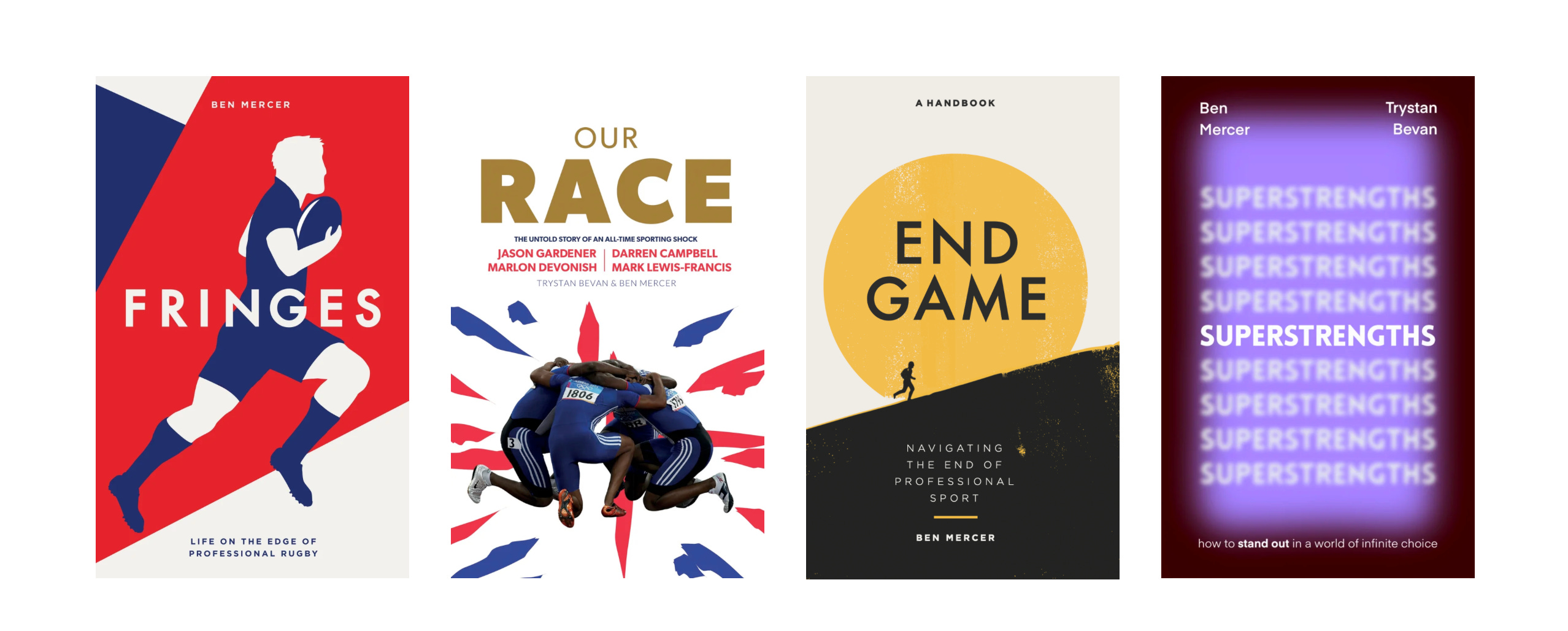
If you want to help me out for free, you can share this letter with someone who might enjoy it, either on social media or by directly sending it to them using the button.
I’ll see you next time.