
the outlier №278
notes from a small island

I’m Ben Mercer and welcome to The Outlier. This letter covers a lot of ground — taking in my move from pro rugby player to author and online man of letters — with reflections on books, interesting individuals, cross-cultural connections and the odd detour.
Hi there,
This week brings a dispatch from the outer edges of the British Isles. I’ve spent a week on Tresco, in the Isles of Scilly.
Tresco is beautiful, fascinating and contradictory. It’s a desert island paradise battered by the same winds that rattle the coast of Cornwall, its highest point just 44 metres above sea level. The kind of waves you’d see carrying surfers in Penzance roll in between the isles, away from the rocks that guard its dunes, gardens and gentle rises. It’s a low-lying island that feels both safe and a little precarious, surrounded by invisible rocky guardians beneath the sea.
Tresco and its neighbouring islands have long been linked to Lyonesse, the drowned kingdom of Arthurian legend. Lyonesse was a rich kingdom that lay between Cornwall and the Isles of Scilly that disappeared in a moment, swallowed by the sea in a swift catastrophe.
True or not there is a lingering sense of something mythical in Tresco, a sense of being cut off and a sense perhaps of something lost.


But there is something made here too.
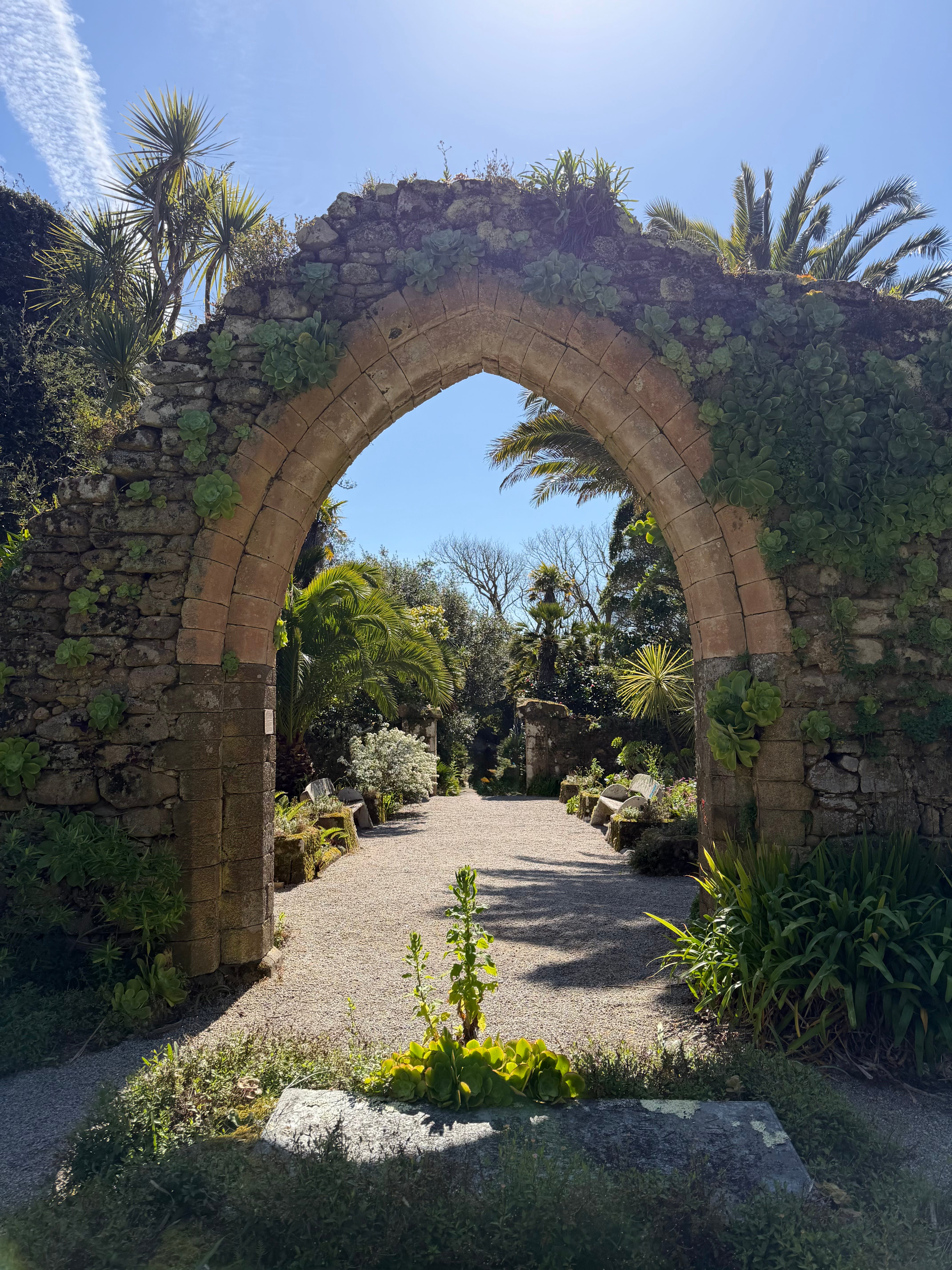
Modern Tresco has been shaped by a single family after a man named Augustus Smith took custodianship of the island in the 1830s. His project became an experiment, a composition where he aimed to bring to bear an aesthetic vision while improving living conditions for the islanders. The focus of his vision was built in the ruins of a Benedictine Abbey where Smith gathered plants from his various travels, accruing specimens from South Africa, Australia, and South America which thrive, slightly improbably, due to the Gulf Stream.
Wandering the garden, the juxtaposition of mythical British remnants with tropical flora combined with the unlikely sight of red squirrels creates a sense of the unreal. It’s a place that shouldn’t really exist.
Our trip was lent an air of the surreal when waiting to board the Scillonian Ferry, we were entertained by a troupe of morris dancers who were heading to the island for the Easter Weekend. We found them again in the Abbey Gardens, dancing about in front of a collection of carved ships’ prows, salvaged from wrecks or washed up on shore around the island.
One day we took a boat to the smaller island of St Agnes where after a walk we had a bowl of soup at The Turk’s Head, the most south-westerly pub in Britain, its thick walls sheltering a community of about 80 people and whoever might jump off a boat at the jetty nearby. It’s a final outpost before the grey skies and lonely seas of the Atlantic.


Tresco feels like something plundered, sand snatched from the depths of the ocean, piratical and mystical remnants the backdrop to a working community orbiting a strand of old world noblesse oblige.
I looked into the literary background of the place and while I didn’t find much beyond a childhood classic, Why The Whales Came by Michael Morpurgo, there is a quiet literariness to Tresco and the Isles of Scilly. The weather arrives and leaves quickly, the light softens and obscures or blinds with its brilliance, the sea and air vary enormously in temperature from one side of the island to another and the diverse cast of characters that populate the place burst with storytelling potential. The lingering sense of myth combines with the practical realities of island life, where one day the shop has no fresh produce left as the boats aren’t running. Life conforms to the landscape and while the surroundings have an air of the hyperreal, it’s hard to escape the realities of the ocean and its elements.
One uninhabited island stood across the water from where we were staying, housing a lone lighthouse facing southwest to the open ocean. I couldn’t help but think what it must be like to look out from there, to see something paradisiacal the one way and nothing but sea the other.
It’s a curious place, one I’m delighted to have experienced and where I’ll hopefully return.


some reading
I’ve had an active week but managed a bit of reading, largely late at night. I began a few shorter bits from Thoreau and G.K. Chesterton which make a change of pace from my more modern recent reads but while I get to grips with those, I was surprised by a couple of books.
Rivals by Jilly Cooper is enormous fun. The story centres on former show jumper turned MP Rupert Campbell-Black’s sexual escapades in the Cotswold-ish count of Rutshire but there’s a large and diverse cast of characters to keep up with. Late to the party as usual, I recently finished watching the series adaptation on Disney+ which was as silly and chucklesome as I’d anticipated but with a fair bit of bite that I hadn’t. The book was similar, well-written in the way that makes 700 or so pages fly by but with a depiction of learning difficulties, sexuality and social commentary that slightly bely its 80s origins and fluffy reputation.
I was invited to the launch of Cooper’s final book which was cancelled due to train strikes and she passed away some time afterwards. It felt like a missed opportunity to meet someone fascinating (and by all accounts very, very good fun) but I’m pleased I got around to reading Rivals.
Then slightly more on theme for my island jaunt, The Wizard of Earthsea was another book that subverted my expectations. I was expecting a classic swords and sorcerers fantasy epic in in the vein of Lord of the Rings but while the hero Ged ranges far and wide, often sailing his way between the islands of Earthsea, the story is much smaller in scope, a personal and philosophical reckoning. Ged is a young, talented wizard who in a fit of hubris, summons a shadow creature that stalks him for years afterwards. It’s much more subtle and insightful than I was expecting, having never read Le Guin before, and I’ll explore the series further.
a quote
From that time forth he believed that the wise man is one who never sets himself apart from other living things, whether they have speech or not, and in later years he strove long to learn what can be learned, in silence, from the eyes of animals, the flight of birds, the great slow gestures of trees.
– from The Wizard of Earthsea, by Ursula Le Guin
lastly
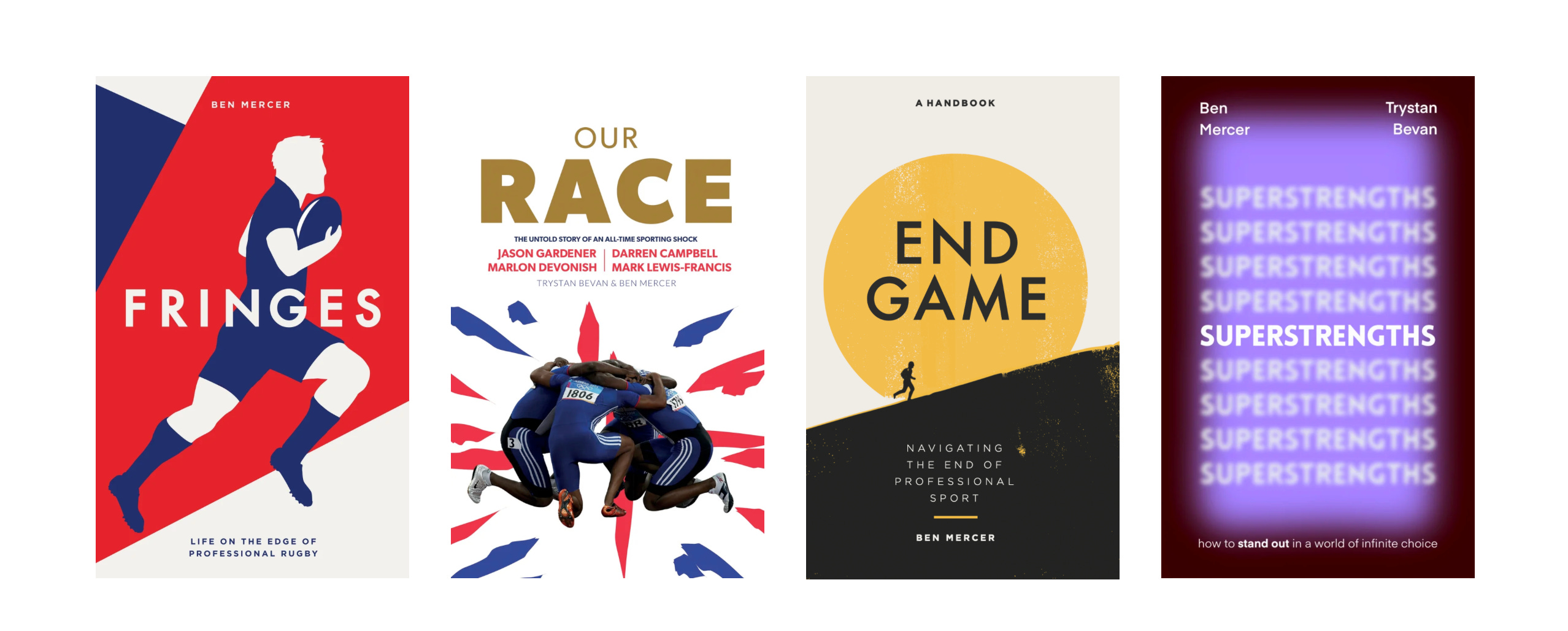
Thanks for reading! My work is made possible by you so if you’d like to support me you can buy my books, hire me to do something or you can become a paid subscriber using the button below.
If you want to help me out for free, you can share this letter with someone who might enjoy it, either on social media or by directly sending it to them using the button.
I’ll see you next time.
Tresco sounds dreamy. Had never even heard of it. And I just read the Earthsea series last fall, ripped through them all consecutively. Still thinking about them.